
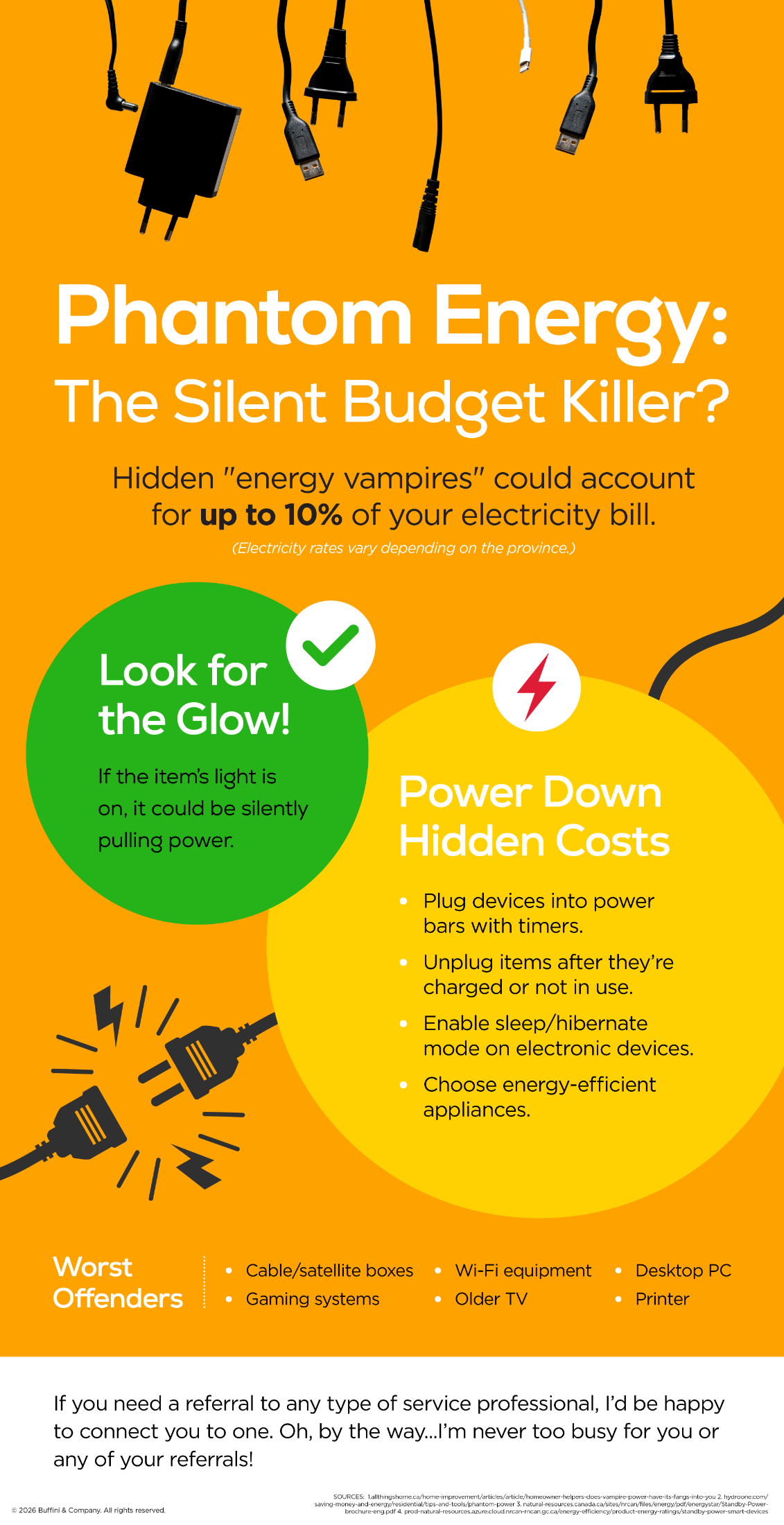
Many homeowners are surprised to learn that some household devices continue using electricity even when they're turned off.
This is known as phantom energy (sometimes called standby power or vampire power), and while each device may only use a small amount of electricity, those costs can add up over time.
If you're looking for practical ways to reduce your household expenses, understanding phantom energy is a good place to start.
What Is Phantom Energy?
Phantom energy is the electricity consumed by electronic devices while they are plugged in but not actively being used.
Many modern devices remain in standby mode so they can start quickly, maintain settings, receive updates, or stay connected to the internet.
While convenient, this means they're still drawing power 24 hours a day.
Common Energy Vampires Found in Most Homes
Some of the most common sources of phantom energy include:
Cable and satellite boxes
Gaming consoles
Wi-Fi routers and networking equipment
Desktop computers
Printers
Older televisions
Device chargers left plugged in
A simple way to identify potential phantom energy users is to look for devices with indicator lights that remain on even when the device isn't being used.
How Much Can Phantom Energy Cost?
The exact amount varies depending on the number of devices in your home and local electricity rates.
However, energy experts estimate that standby power can account for a noticeable portion of a home's overall electricity consumption.
For many households, reducing phantom energy can be an easy way to lower monthly utility costs without sacrificing comfort or convenience.
Simple Ways to Reduce Phantom Energy
The good news is that reducing phantom energy doesn't require major upgrades or expensive renovations.
Here are a few practical steps homeowners can take:
Use Smart Power Bars
Smart power bars can automatically shut off power to devices that aren't in use, helping eliminate unnecessary electricity consumption.
Unplug Chargers
Phone chargers, laptop chargers, and other charging devices can continue drawing power when left plugged in.
Enable Sleep and Hibernation Modes
Computers, monitors, and other electronics often have built-in energy-saving settings that significantly reduce power consumption.
Upgrade Older Electronics
Newer appliances and electronics are generally designed with greater energy efficiency in mind.
Create a Shutdown Routine
Before bed or when leaving for an extended period, consider turning off power bars connected to entertainment systems, office equipment, or other non-essential electronics.
Small Changes Can Add Up
One of the things I've learned through years of helping homeowners is that small improvements often create meaningful results over time.
Whether it's maintaining a home, improving efficiency, or reducing monthly expenses, the biggest gains frequently come from simple habits that are easy to implement and maintain.
Phantom energy may seem like a small issue, but addressing it can be a practical step toward better household efficiency and lower utility costs.
Final Thoughts
Owning a home comes with ongoing responsibilities, and understanding where your money goes is part of making informed decisions.
Taking a few minutes to identify and reduce phantom energy usage can help improve efficiency, lower costs, and give you greater control over your household budget.
If you have questions about homeownership, buying, selling, or living in Fort St. John, I'm always happy to help.

Comments:
Post Your Comment: